Stay Updated With Our Latest Insights
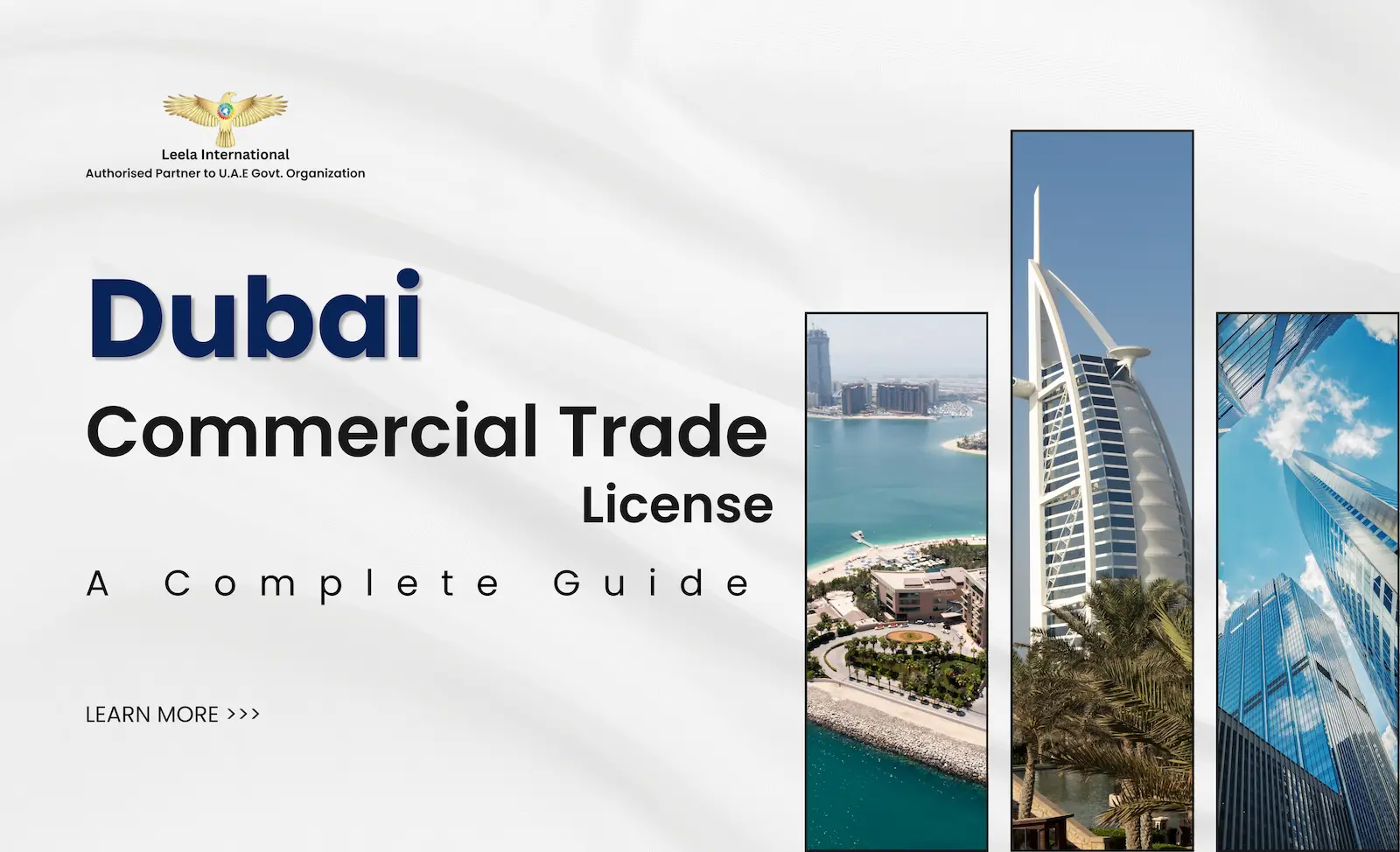
Navigating the Dubai Commercial Trade License: A 2026 Guide for Global Traders
What is a Commercial Trade License in Dubai and Who Needs It?
The commercial trade license in Dubai is the legal license that allows a company to carry out trading activities. The trade license allows the importing, exporting, storage, and distribution of products. Dubai’s market is really active, and the Department of Economy and Tourism (DET) is the main body that issues commercial licenses for companies for mainland Dubai. As per trade data, the non-oil foreign trade of the UAE touched AED 3.5 trillion in 2023, indicating huge possibilities for licensed traders.
The question that any business owner would ultimately desire to ask is: which selling businesses are required to have a commercial license? The truth is that any business that mainly deals with the purchase and sale of physical items would need this commercial license.
Mainland vs. Free Zone: Which License Fits Your Trading Business?
One of the first considerations is whether to opt for a Mainland license or a Free Zone license. Both are beneficial for trading companies.
- 1. Mainland Commercial License – A DET license that enables your business to trade throughout the UAE market, even beyond free zones. It is a great choice when serving the local UAE market or pursuing government sector contracts. According to industry practice, the license once used to require a local sponsor to own 51% of the business, but recent changes now permit 100% ownership for most commercial activities.
- 2. Free Zone Commercial License – Issued within designated economic zones, this license is favored for allowing 100% foreign ownership and offering tax advantages. A free zone company is generally limited to conducting business within its own zone and internationally. To sell directly in the mainland UAE market, it usually must appoint a local distributor or set up a mainland branch.
- 3. Offshore Commercial License – This type of license is not issued to carry out trading activities in the UAE. It is used for holdings, global trade, and tax planning. An offshore entity is not allowed to carry out any commercial activity in the UAE and will have to conduct any mainland business with the help of an agent.
The selection of your jurisdiction is the most crucial factor that influences your market access, ownership, and flexibility of operations in Dubai, and it ultimately influences your commercial trade license in Dubai success.
How to Secure a Commercial Trade License in Dubai: The 2026 Process
Applying for a commercial trade license is now simpler, but still some work is needed to get through. The DET has further connected and moved services online in 2026. But the process remains the same. The initial stage involves defining your business activity, choosing a trade name, and obtaining initial approval.
Essential Documents and Eligibility for Applicants
Eligibility requirements for a mainland commercial license entail that the minimum age requirement is 21 years old. In most cases, a UAE or GCC citizen is appointed as a local sponsor and owns 51% of the company shares, except for business activities under the 100% foreign ownership list. Expats can also qualify for a business license either by setting up in a free zone or by using a local service agent. These documents are required as follows:
- • Copies of passports of every shareholder and partner.
- • A comprehensive business plan.
- • Registered address proof (Ejari).
- • First approval certificate of the DET.
- • Certificate of trade name reservation.
Understanding the Commercial License Cost in Dubai
The commercial license cost in Dubai doesn’t have a flat rate. Instead, the price is comprised of government fees, setup costs, and renewal costs, which all differ given license type, activity, and free zone or jurisdiction. If you opt for a mainland license, the government charges AED 10,000 and AED 15,000, with total costs of AED 25,000 and AED 50,000 and upwards.
Which Trade License in Dubai is the Cheapest? A Cost Comparison
No question is asked more frequently than the “most economical” one, and it is based on how you do business. Here is a comparison.
License Type | Typical Initial Cost Range (AED) | Key Features |
[Mainland](https://leelainternational.com/mainland-company-formation/) | 25,000 – 50,000+ | Trade anywhere in UAE, government contracts, 100% ownership for some activities. |
[Free Zone](https://leelainternational.com/free-zone-company-formation-in-dubai/) | 15,000 – 30,000 | 100% foreign ownership, tax benefits, restricted to zone/international trade. |
[Offshore](https://leelainternational.com/offshore-company-formation-in-dubai/) | 10,000 – 20,000 | Asset holding, international trading, no physical UAE presence. |
The cost-effective Free Zone license is ideal for individual entrepreneurs or small trading companies seeking international business. The largest market access is achieved with a mainland license with the more substantial investment. The cheapest license is not necessarily the best license; it depends on your commercial objectives.
Key Benefits and Compliance in 2026: Banking and Regulated Activities
Obtaining a commercial trade license in Dubai grants a range of benefits, including access to international markets, world-class logistics infrastructure, and eligibility for residency visas for you and your family. Yet, 2026 brings a sharper focus on compliance. UAE banks have become increasingly stringent, mainly with corporate account applications.
Navigating Corporate Bank Accounts and Regulated Products in 2026
What has caused the delays and rejections for new businesses? A major hurdle new businesses face is opening a corporate bank account. Banks are deeming all new applications with shallow activities – simply “General Trading” – as not detailed enough. You will need to be precise with what you sell and state it clearly. Having a website or social media page helps.
Also, there are some types of trading that need specific permissions. It is also necessary to obtain separate permits from entities like the Ministry of Health and Dubai Municipality to trade regulated items like medical devices, building materials, and certain types of food.
Quick Checklist for Your 2026 Dubai Commercial Trade License
In a nutshell, below is a checklist that will help you work your way to getting a commercial trade license in Dubai.
- • Introduce your particular trading activity or product lines.
- • Choose your jurisdiction: onshore, free zone, or offshore.
- • Identify if local sponsors are required or 100% foreign ownership applies.
- • Gather all required documents, including your passport copies and business plan.
- • Budget for commercial license cost in Dubai, inclusive of government and setup fees.
- • Make sure your business has an online profile established for your bank account approval.
- • Check if there are any specific regulatory clearances needed for your products.
Partnering with a seasoned consultancy like Leela International can simplify this complex process, ensuring your application is compliant and your business is set up for success from day one.
Conclusion
Securing a commercial trade license in Dubai is a great opportunity for international entrepreneurs to access one of the world’s leading economies. Although you will need to navigate different license types, costs, and compliance requirements, the advantages of market access and a business-friendly environment make it worthwhile.
With expert guidance from firms like Leela International, you can efficiently set up your trading entity and focus on growth in the UAE market.
FAQ’S
Some of the most affordable start-up ideas include freelancing and e-commerce business ideas that require a free zone license or a freelance permit and can cost as little as AED 7,500 to set up. These types of low-investment business ideas usually require low investments.
Yes, it can be done with a good business, like a profitable online store, trading company, or a freelanced consultancy business. But it will take a good business plan, licensed activity, and marketing.
A local sponsor (UAE national) was earlier necessary to have 51% ownership for all commercial activities in the entire UAE. But with recent changes, a foreign company can own 100% of its shares in over 1,000 commercial and industrial activities, so it all depends on your business activity.