Stay Updated With Our Latest Insights
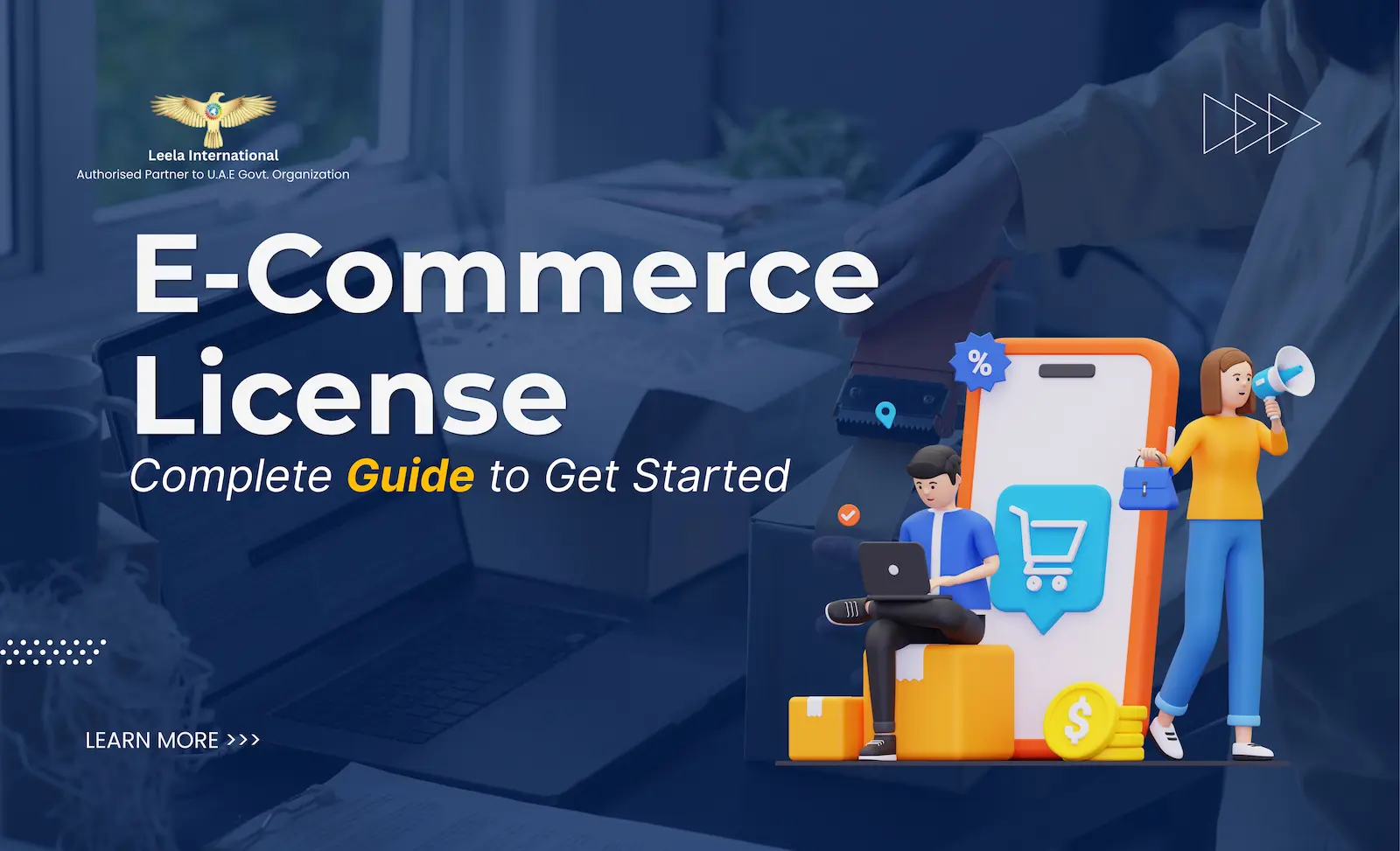
E-commerce License in Dubai for Expats: Your Path to 100% Ownership
Dubai has become a worldwide center of digital trade in no time, supported among others by one of the highest internet penetration rates on the planet and a prospering logistics infrastructure. For a number of expatriates and foreigners aspiring to open online businesses, the best opportunity to set shop is a matter of concern.
Yet, while newcomers and seasoned entrepreneurs alike have to clear the same hurdles, the rules have been adapted in detail for attracting abroad-born online merchants. For this reason, learning about the specific rules for studying an E-commerce license in Dubai for expats should be the first step along a path to the MENA ecommerce market.
Can Foreigners Start an E-Commerce Business in Dubai?
Short answer: yes. Foreigners, even without visiting the UAE before, are able to own 100% of e-commerce companies in Dubai. Unlike more than a decade ago, one could use a sponsor or local partner to build a business in the whole country. Present law has updated all regulations, and there is no need to partner with a UAE company anymore.
On establishing a company, you will have ownership of 100% of your new company’s shares, profits, and the operation of your business.
What Is an E-Commerce License and Why Is It Legally Required?
An E-commerce license in Dubai is a specific trade license issued by a UAE authority (either a Free Zone Authority or the Department of Economic Development – DED) that permits you to sell goods or services online. It is a legal requirement; operating an online store without a valid UAE trade license can lead to fines, visa rejections, and the forced closure of your business.
Unlike a general trading license, this specific license categorizes your activity as “electronic trading,” ensuring you are compliant with the UAE’s Federal E-Commerce Law. For an expat, this document is also the key that unlocks your residency visa.
Free Zone vs. Mainland License: Which Is Better for Expats?
For the expat, the options generally boil down to a Free Zone License or a Mainland License. Most business owners online opt for a Free Zone due to reduced costs and 100% ownership, but a Mainland license is great if you want to do business directly in the UAE market without any limitations. If you plan to cater mostly to an international market or ship direct to consumers online, a Free Zone is the most affordable and easier option.
Advantages of a Free Zone E-Commerce License
- • 100% Foreign Ownership: As previously stated, this feature enables you to keep all the profit share while avoiding the requirement of a local Emirati partner.
- • Tax Efficiency: Free Zones have a very attractive tax regime. Although the UAE has announced a new corporate tax at 9%, Free Zone companies that generate “Qualifying Income” will enjoy a 0% corporate tax rate. See our guide to UAE corporate tax filing for small businesses.
- • Efficient Setup: As your setup can be completed completely online, you can establish your company at any time without having to visit the UAE first.
- • Visa Quota: Your license enables you to apply for residence visas for yourself, your family members, as well as your employees.
- • Repatriation of Capital: It is possible to repatriate your profits to your home country without any restrictions, which makes it a big advantage for Indian and other international investors.
Step-by-Step Process to Get Your License
Getting your license is pretty simple if you have the right paperwork. This is what you do:
- 1. Determine Your Business Activity: Make sure you have the right activity code (“E-commerce via websites,” “Dropshipping,” etc.). You can explore e-commerce business setup in Dubai for activity-specific guidance.
- 2. Choose a Free Zone: When setting up a business, you can pick from various zones like IFZA, Meydan, or RAKEZ. Each zone caters to different industries. Use our UAE free zone authorities guide to compare them.
- 3. Submit Application: Show your passport copy, photo, and proposed business names to the authority.
- 4. Pay Fees and Receive License: Once you meet the requirements, you pay for the license and get your license in the form of a digital license. Review Dubai trade license costs for 2026 before you budget.
- 5. Apply for Visa and Bank Account: With your new license, get an Emirates ID and a corporate bank account.
Can I Open a Business in Dubai if I Don’t Live There?
Yes, you can. This is a question we receive quite frequently from expats in the planning stages of their Dubai move. Most Free Zones allow you to establish a company remotely. This means signing the necessary documents can be done without being in Dubai. It is possible for you to start all processes from India, the UK, or elsewhere in the world as this is not crucial.
To open a business bank account in the UAE, currently, most UAE banks require the owner to be present locally for a video call or even face-to-face interview, yet some digital banks are now enabling this process online.
Why Dubai Is a Strategic Choice for E-Commerce
On top of the sunshine, there are real business reasons to be in Dubai. The Emirates is a logistics hub, with Jebel Ali Port and several airports linking East and West. Your product can be shipped quickly to the high-spending Gulf States – or to addressable markets like Saudi Arabia.
The high rate of smartphone adoption means your market will always be connected, and as an expat, the strength of the safety record, infrastructure, and connectivity make Dubai a perfect base for a digital nomad business model.
Final Checklist for Starting Your E-Commerce Business in Dubai
Before launching your E-commerce shop in Dubai, ensure these tasks are completed:
- • Selected to have the Free Zone or a Mainland structure (the Free Zone is recommended for most expats). Compare mainland vs. free zone options if you are unsure.
- • Chosen a credible Free Zone authority.
- • Had your passport and business plan ready.
- • Accounted for the visa fee and for the fee for the license and possible expenses for the visa.
- • Understand your UAE Corporate Tax.
At Leela International, we specialize in guiding expats through this exact journey. We simplify the complexities of the E-commerce license in Dubai for Indians and other foreign nationals, ensuring your setup is compliant, cost-effective, and aligned with your business goals. Our business consulting service in Dubai can help you choose the right structure and stay compliant from day one.
FAQ’S
The UAE currently imposes a 9% corporate tax on profits exceeding AED 375,000. However, Free Zone companies may still enjoy a 0% rate on “Qualifying Income” if they meet specific conditions, such as not conducting business with the mainland UAE. Learn more in our UAE corporate tax filing guide for small businesses.
No. A license for e-trading is different from an e-commerce license. An e-trader license gives the trader access to the e-market without being involved in any e-business activity, while a license to e-commerce actually involves e-business activity.
Yes, this is achievable for mature online merchants, but earnings are first and foremost determined by your niche product, marketing success, and margins. The average disposable income is high, which ensures that the consumers are ready to make the purchase of products at a premium to the quality products.
This refers to a Mainland license issued by the Dubai Department of Economic Development. It allows you to sell directly to the local UAE market without restrictions, but it historically required a local partner and is more expensive than a Free Zone license.
No, Free Zones generally provide “Flexi-Desks” or shared workstations for the “home-address” on their package. This address gives you the physical presence you need without the expense of a relocation to a dedicated office. You can also explore how to get a virtual office address in Dubai legally.